HomeAboutGovernance Political CareerGlobal Role Policy & ImpactInsightsContact

Political Career & Leadership

Three decades as a legislator, party builder, and national leader — charting the trajectory of a political life that shaped the BJP's southern strategy and produced one of the party's most accomplished organizational minds.

Three Terms, Three Eras of Telangana Politics

The legislative career of Nallu Indrasena Reddy spans three distinct periods in the political history of undivided Andhra Pradesh and the Telangana region, each election reflecting not merely a personal political victory but a broader shift in the political landscape of southern India. His three terms as a Member of the Legislative Assembly — in 1983, 1985, and 1999 — constitute a remarkable record of electoral resilience and grassroots appeal in a region where BJP's presence was, for much of this period, a work in progress.

1983: The Young Challenger

When Nallu Indrasena Reddy first won election to the Andhra Pradesh Legislative Assembly in 1983, he was just 30 years old — placing him among the youngest legislators in the house. This was a period of significant political upheaval in Andhra Pradesh: N.T. Rama Rao and the Telugu Desam Party had burst onto the scene, challenging the Congress hegemony that had defined state politics since independence. In this volatile environment, a young BJP candidate winning a seat was a remarkable achievement that spoke to both his personal appeal and his capacity for political organization.

The 1983 victory was more than an electoral footnote. It established the BJP's credibility as a viable political force in the Telangana region and demonstrated that the party's message of cultural nationalism and good governance could resonate with voters in a state traditionally dominated by regional and national parties with very different ideological orientations. For the young Indrasena Reddy, it was the beginning of a lifelong engagement with the complex dynamics of Telangana politics — an engagement that would shape his understanding of coalition building, community engagement, and the relationship between ideology and electoral pragmatism.

1985: Malakpet and the Art of Urban Representation

The Malakpet constituency, located in the heart of Hyderabad's old city, presented challenges that would test the mettle of any politician. A densely populated urban constituency with a mixed demographic profile spanning multiple religious, linguistic, and economic communities, Malakpet required a representative who could transcend narrow identity politics and speak to the common aspirations of a diverse electorate.

Indrasena Reddy's victory in Malakpet in 1985 was a testament to his ability to do precisely this. His campaign and subsequent representation focused on issues that united rather than divided: urban infrastructure, water supply, sanitation, education, and economic opportunities. He demonstrated that a BJP leader could win and govern effectively in constituencies that did not fit the conventional understanding of the party's support base — a lesson that would prove relevant decades later as the party sought to expand its footprint in urban India.

His work in Malakpet also highlighted a quality that would define his later career: an instinct for inclusive governance. Rather than retreating into ideological comfort zones, he engaged with all sections of his constituency, building relationships across community lines and establishing himself as a representative of the constituency as a whole rather than any particular section of it. This approach — born of pragmatic political necessity but rooted in genuine conviction — became a hallmark of his political style.

1999: The Seasoned Legislator Returns

By 1999, when Nallu Indrasena Reddy won his third term, the political landscape had transformed dramatically. The BJP was at the zenith of its national influence, leading the NDA coalition government at the centre. In Andhra Pradesh, the political dynamics were shaped by the rivalry between the Telugu Desam Party and the Congress, with the BJP playing a strategic role in the state's alliance politics.

His third victory came with the weight of experience and expectation. Now a seasoned legislator with over fifteen years of political experience, he brought to the assembly a deeper understanding of legislative processes, policy frameworks, and the mechanisms through which political will translates into administrative action. His focus during this term reflected this maturity — moving beyond constituency-level concerns to engage with broader questions of urban governance, regional development, and the institutional frameworks needed to support democratic governance in a rapidly changing society.
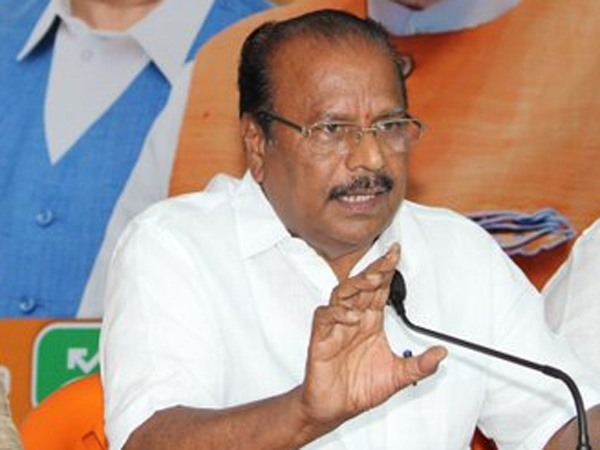
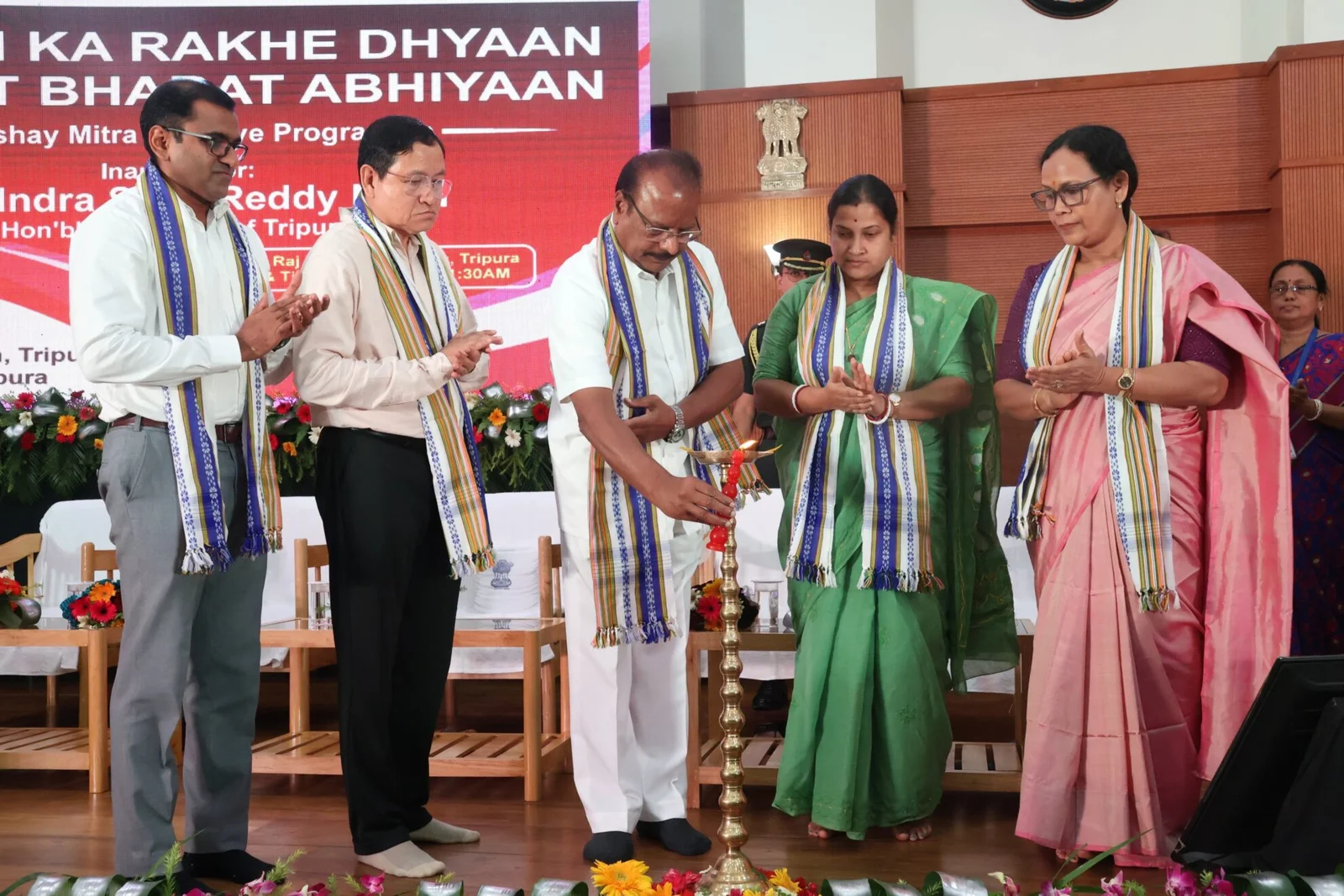
Nallu Indrasena Reddy in political engagement

Electoral Record

First Term
1983
Andhra Pradesh Legislative Assembly — Elected at age 30
Second Term
1985 — Malakpet
Won from one of Hyderabad's most diverse constituencies
Third Term
1999
Returned as a seasoned leader during BJP's national ascent

Building the BJP: From State to Nation

The organizational contributions of Nallu Indrasena Reddy to the Bharatiya Janata Party extended far beyond electoral politics — encompassing party building, cadre development, and strategic expansion into new territories.

The transition from electoral politician to party organizational leader is one that few make successfully. It requires a shift in focus from constituency-level concerns to the broader strategic challenges of building a national political movement. Nallu Indrasena Reddy made this transition with a fluency that reflected his deep understanding of both the grassroots mechanics and the strategic imperatives of Indian politics.

As BJP National Secretary, he was entrusted with responsibilities that spanned the organizational spectrum — from managing state-level party elections to coordinating national campaign strategies, from nurturing emerging leaders to maintaining the ideological coherence of a rapidly expanding political organization. His role was particularly significant in the context of the party's southern expansion strategy, where his understanding of Telangana and Andhra Pradesh politics provided invaluable insights for a party that was still establishing its presence in the Deccan region.

The period of his national-level engagement coincided with one of the most transformative decades in Indian politics. The BJP's journey from being a junior coalition partner to becoming the dominant political force in India required organizational innovation, strategic clarity, and the kind of ground-level execution that Indrasena Reddy had perfected through decades of Telangana politics. His contribution to this transformation — while less visible than those of the party's public-facing leaders — was integral to building the organizational infrastructure that made electoral success possible.

🏗️

Cadre Development

Designed and implemented training programmes for party workers across multiple states, building the organizational capacity that forms the backbone of the BJP's electoral machinery. His approach emphasized both ideological grounding and practical political skills.

🗺️

Southern Expansion

Played a key strategic role in the BJP's efforts to establish a meaningful presence in Telangana and Andhra Pradesh, bringing his deep understanding of regional political dynamics to bear on the party's southern strategy.

🤝

Alliance Management

Contributed to the complex task of managing political alliances at state and national levels, drawing on his experience of coalition politics in a multi-party democracy to build and sustain partnerships that advanced the party's strategic objectives.

Shaping Political Discourse Across Decades

Long before the formal bifurcation of Andhra Pradesh, Nallu Indrasena Reddy was engaged with the questions of regional identity that would eventually define the Telangana statehood movement. His political career in the combined state gave him a nuanced understanding of the aspirations and grievances that drove the demand for a separate Telangana, and his organizational work helped ensure that the BJP's position on this sensitive issue was both principled and politically astute. His engagement with Telangana's political identity was rooted in a genuine understanding of regional aspirations rather than opportunistic calculation.

His legislative experience in Hyderabad constituencies gave him firsthand exposure to the challenges of urban governance in a rapidly growing Indian city. Issues of municipal infrastructure, urban planning, water management, and the relationship between urban expansion and environmental sustainability were central to his legislative work. This urban governance perspective has remained relevant throughout his career, informing his understanding of the developmental challenges that cities across India continue to face.

One of the most significant aspects of Indrasena Reddy's political career has been his consistent engagement across community lines. In constituencies with mixed demographic profiles, he demonstrated that political leadership could be exercised in ways that brought communities together rather than exploiting divisions. This approach — which some might view as politically counterintuitive for a party often perceived through an ideological lens — reflected both pragmatic political wisdom and a genuine commitment to the idea of inclusive representation.

At the national party level, Indrasena Reddy contributed to organizational innovations that strengthened the BJP's ability to compete in an increasingly complex political environment. From booth-level management systems to state-level organizational structures, his input helped create the institutional architecture that supports the party's electoral and governance capabilities. His understanding of organizational dynamics — how to build lasting structures rather than personality-dependent systems — has been one of his most enduring contributions to Indian politics.

Throughout his career, Nallu Indrasena Reddy has been committed to nurturing the next generation of political leaders. His approach to mentorship goes beyond mere advice-giving — it involves creating opportunities for younger leaders to gain practical experience, providing platforms for their growth, and ensuring that organizational knowledge is transmitted across generations. Many current BJP leaders in Telangana and beyond credit his guidance as instrumental in their political development.

His combined experience of state-level politics, national party leadership, and constitutional governance has given him a comprehensive understanding of India's federal structure. He has consistently advocated for a model of cooperative federalism in which the Centre and states work as partners rather than competitors, and in which the constitutional mechanisms for inter-governmental coordination are used to their full potential. This perspective informs his current role as Governor, where he serves as the constitutional link between the Union and Tripura.

Political career moment
BJP leadership event
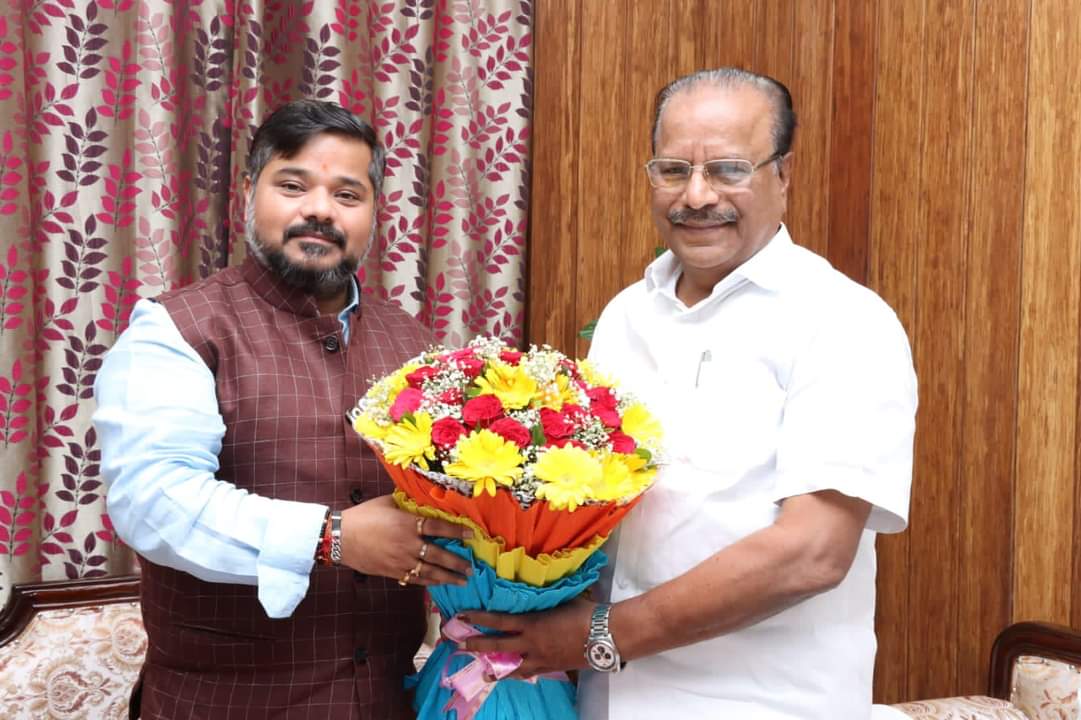
Public engagement