HomeAboutGovernance Political CareerGlobal Role Policy & ImpactInsightsContact

Governance & Constitutional Role

As the 20th Governor of Tripura, Nallu Indrasena Reddy serves as the constitutional head of a state rich in cultural heritage and developmental potential — bridging the Union's vision with the state's aspirations.

Guardian of the Constitution in India's Northeast

The Governor of an Indian state occupies a unique position within the constitutional architecture of the republic. Appointed by the President of India under Article 155 of the Constitution, the Governor serves as the representative of the Union in the state — a role that is simultaneously ceremonial and substantive, symbolic and functional. In the context of Tripura, a state with its own distinct historical trajectory, tribal heritage, and developmental challenges, this role acquires additional dimensions of complexity and significance.

Nallu Indrasena Reddy assumed the office of Governor of Tripura in 2023, bringing to the Raj Bhavan not merely the ceremonial dignity that the office demands, but a substantive understanding of political processes, organizational dynamics, and the relationship between governance and human development. His appointment marked a bringing together of southern Indian political experience and northeastern Indian administrative responsibility — a combination that has informed his approach to the role in distinctive ways.

The Governor's role in India's federal system has evolved significantly since independence. While the Constitution envisages the Governor primarily as a constitutional head acting on the advice of the Council of Ministers, the office also carries important discretionary powers — particularly in situations involving the formation of government, dissolution of the assembly, and the reservation of bills for presidential consideration. In the northeastern states, with their special provisions and unique demographic profiles, these discretionary elements assume particular significance.
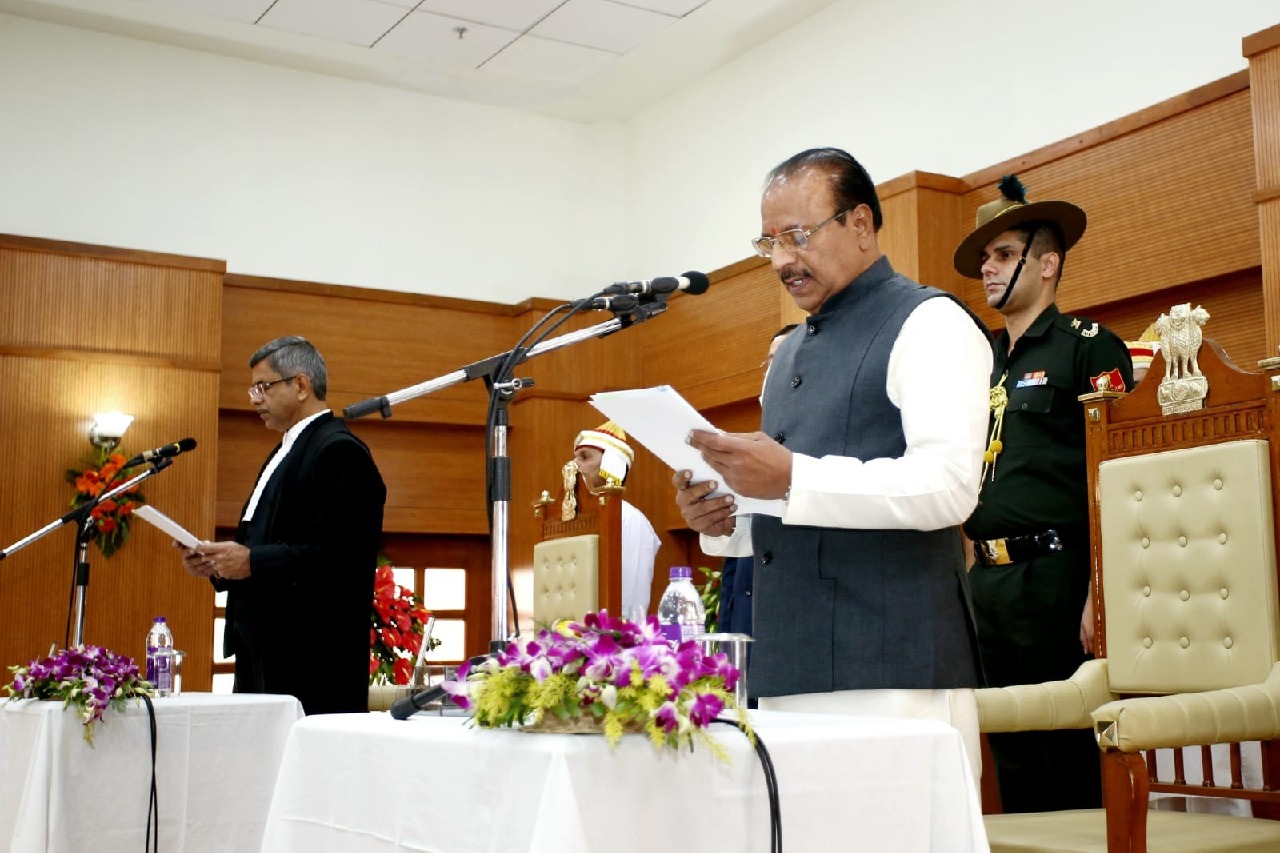
Governor Nallu Indrasena Reddy taking oath of office

Duties & Functions of the Governor

The constitutional framework vests in the Governor a range of executive, legislative, and discretionary powers that form the backbone of state-level governance.

01

Executive Authority

All executive action in the state is formally taken in the name of the Governor. This includes the appointment of the Chief Minister and, on the Chief Minister's advice, the Council of Ministers. The Governor also appoints the Advocate General, members of the State Public Service Commission, and other key constitutional functionaries, ensuring the institutional framework of governance remains robust and impartial.

02

Legislative Functions

The Governor summons, prorogues, and can dissolve the state legislative assembly. No bill can become law without the Governor's assent, and the Governor has the power to reserve certain bills for the consideration of the President. Additionally, the Governor can promulgate ordinances when the legislature is not in session, ensuring continuity of governance during legislative recesses.

03

Chancellor of Universities

As Chancellor of all state universities, the Governor plays a pivotal role in the academic governance of Tripura. This function extends to the appointment of Vice-Chancellors, presiding over convocations, and ensuring that institutions of higher education maintain standards of academic excellence and administrative integrity. In a state with growing educational aspirations, this role carries particular weight.

04

Judicial Powers

The Governor is consulted in the appointment of judges to the High Court and exercises the power of granting pardons, reprieves, and remissions of punishment for offences against state laws. These judicial functions require the exercise of careful judgement and a deep understanding of the principles of justice and mercy that underlie the constitutional framework.

05

Federal Liaison

Perhaps the most nuanced aspect of the Governor's role is serving as the vital link between the state and the Union government. This function involves providing regular reports to the President on the affairs of the state, facilitating communication between state and central authorities, and ensuring that the federal compact is maintained in both letter and spirit — a function of particular significance in the northeastern context.

06

Tribal & Cultural Guardian

In states with significant tribal populations like Tripura, the Governor has special responsibilities regarding the welfare and protection of tribal communities. This includes overseeing the implementation of provisions related to Scheduled Areas and Scheduled Tribes, ensuring that developmental processes respect and preserve the cultural identity and traditional rights of indigenous communities.

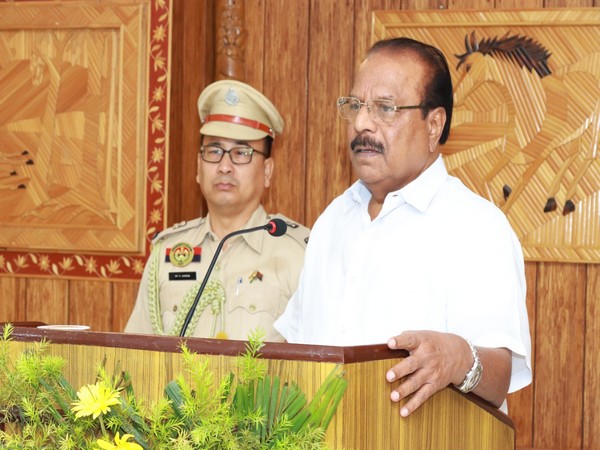
Governor at governance event

"The Governor's office is not a position of power in the conventional sense — it is a position of responsibility. The Constitution entrusts us with the duty to ensure that the democratic will of the people is expressed and implemented through proper institutional channels."

An Institutional Approach to Constitutional Leadership

Nallu Indrasena Reddy's approach to the Governor's office is informed by a clear understanding of the distinction between political leadership and constitutional stewardship. Having spent decades in active partisan politics, he brings to the Raj Bhavan an appreciation for the different mode of engagement that the Governor's office demands — one that prioritizes institutional integrity over political advantage, constitutional propriety over partisan preference.

His governance philosophy in Tripura is built on several key principles. First, he views the Raj Bhavan not as a remote seat of authority but as an accessible institution that should be open to the people and responsive to their concerns. Second, he believes that the Governor's role in facilitating development should extend beyond mere ceremonial endorsement of government policies to active engagement with developmental challenges and opportunities. Third, he recognizes the special responsibility that comes with governing in a state with a significant tribal population, ensuring that the voices and rights of indigenous communities are central to governance discourse.

The intersection of his Telangana political background and his current role in Tripura has created a unique governance perspective. Both regions share a history of asserting distinct cultural identities within larger political units, and both have experienced the challenges and opportunities of developmental transformation. This parallel experience has given him an empathetic understanding of Tripura's aspirations and the sensitivity required to navigate the state's complex social and political landscape.

Understanding the State He Serves

Tripura's unique position — its rich tribal heritage, strategic location, and developmental trajectory — shapes the context within which the Governor exercises his constitutional responsibilities.

0
Recognised Tribal Communities
0
Administrative Districts
0
Area (sq. km)
36.7L
Population (approx.)

Cultural Heritage

Tripura is home to one of India's richest tapestries of tribal culture, with 19 recognised scheduled tribes including the Tripuri, Reang, Jamatia, Noatia, and Chakma communities. The state's cultural landscape encompasses a vibrant tradition of weaving, dance, music, and festivals that reflect centuries of artistic and spiritual practice. As Governor, Nallu Indrasena Reddy has actively engaged with initiatives to preserve and promote this cultural wealth, recognizing it as both an intrinsic value and a resource for sustainable development.

Strategic Significance

Bordered by Bangladesh on three sides and connected to the Indian mainland through a narrow corridor, Tripura occupies a strategically significant position in India's northeastern geography. The state's role in the Act East Policy, its potential as a gateway to Southeast Asian trade, and its importance in the broader security architecture of the region make governance here a matter of both state-level administration and national significance. The Governor's role as a federal liaison takes on particular importance in this context.